About Haxhi Ali Cave
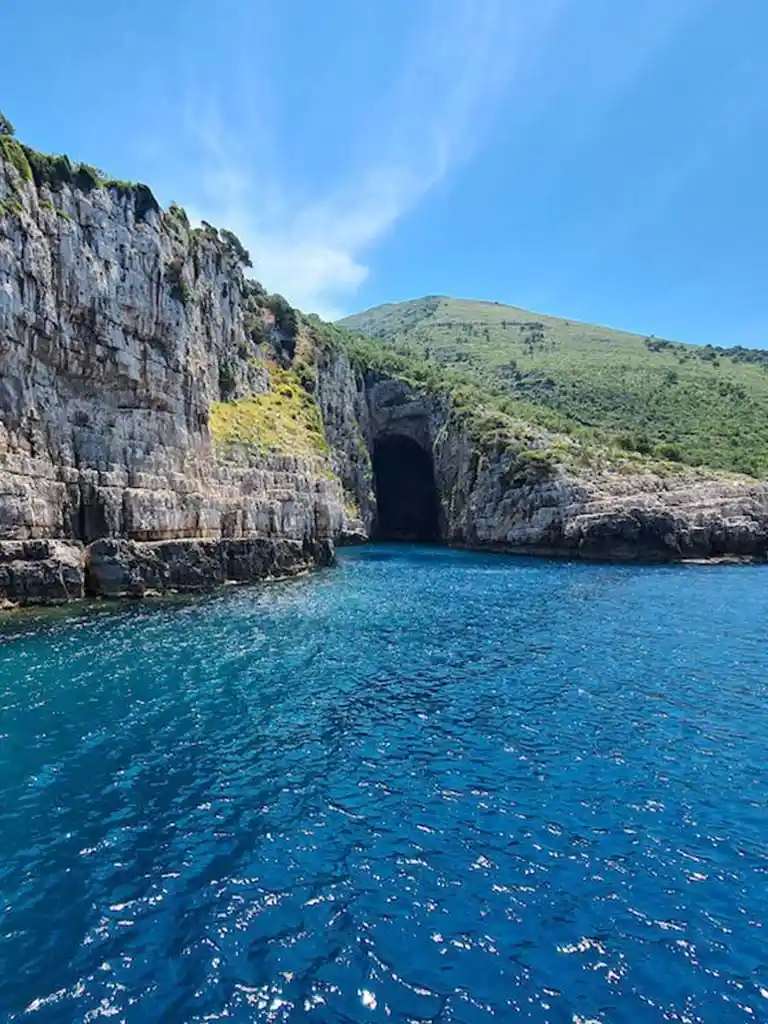
Tucked into the limestone cliffs of the Karaburun Peninsula, Haxhi Ali Cave is one of the most striking natural formations on the Albanian coast. The cave opens through a wide arched entrance that rises dramatically from the water, giving speedboats direct access to its interior. Inside, the walls reflect the turquoise water below, creating a layered play of light and colour that shifts throughout the day depending on the angle of the sun.
The cave extends roughly 30 metres into the cliff face and opens into a sizeable inner chamber. The water beneath is exceptionally clear, reaching depths of up to 20 metres in places. Because it sits within the protected Karaburun-Sazan Marine Park, the surrounding sea is some of the cleanest along the entire Albanian Riviera.
The Legend of Haxhi Ali
The cave takes its name from Haxhi Ali, a 16th-century Albanian sailor whose story has been passed down along the Vlore coastline for generations. According to local accounts, Haxhi Ali was known along the Ionian coast as a skilled and courageous seafarer who defended Albanian fishing communities from raids during the Ottoman period. He reportedly used this cave as a shelter and a hiding place during his coastal voyages, making use of its concealed position within the cliffs of Karaburun.
Whether strictly historical or partly myth, the story has given the cave a character that goes beyond its geology. For local guides and skipper crews, it remains a natural starting point for conversations about the Albanian coastline's maritime past, and most boat tours include a retelling of the legend during the visit.
Geography & Geology
Haxhi Ali Cave is formed in the thick limestone beds that make up most of the Karaburun Peninsula's western coastline. The peninsula itself is one of the few remaining undeveloped stretches of the Albanian Riviera — no roads reach its western shore, and the entire area falls within a designated marine national park. The cave sits at sea level, carved over thousands of years by wave action along a natural fault in the rock.
The wide entrance arch is the cave's most distinctive feature — tall enough and broad enough to allow a speedboat to pass through without difficulty. The inner walls show clear horizontal banding where different layers of limestone have been exposed, and the ceiling has been smoothed by centuries of water contact. The combination of open water, confined rock and reflected light makes the interior visually unlike almost anywhere else on the Ionian coast.
How to Visit
The cave is only reachable by boat — there are no roads or hiking paths that lead to it from land. All tours depart from Vlore, approximately 25 to 30 minutes away by speedboat. The visit typically involves the boat entering the cave so passengers can see the interior from on board, followed by time for photos at the entrance.
We include Haxhi Ali Cave on all four of our tours from Vlore. If seeing the cave is your main reason for booking, the Haxhi Ali Cave & Karaburun tour is the most focused option — a 4-hour half-day trip that goes directly to the cave and then spends the remainder of the time at a Karaburun Peninsula beach. For a longer day that combines the cave with more stops, the Sazan Island & Haxhi Ali Cave tour adds Albania's largest island to the route, and the Grama Bay full-day tour includes the cave as one of eight stops along the entire Karaburun coast. In the evening, the Sunset Wine Tour visits the cave at golden hour with wine and fruit served on board.
Key Facts
The cave extends roughly 30 metres into the Karaburun cliff and features a chamber wide enough for a speedboat to enter.
Water depth inside varies and can reach up to 20 metres, contributing to the intense clarity and colour of the water.
Sunlight through the entrance reflects off the water surface and illuminates the cave walls, producing a distinctive blue-green glow.
The cave sits within the Karaburun-Sazan Marine National Park, one of Albania's most significant protected marine environments.
Haxhi Ali — a 16th-century Albanian seafarer who used the cave as shelter during coastal voyages along the Karaburun Peninsula.
Boat only. No road or walking route reaches this part of the Karaburun coast. All visits depart from Vlore marina.
Frequently Asked Questions
On the Karaburun Peninsula, about 25–30 minutes by speedboat from Vlore. It is only reachable by boat — there is no road access to this part of the coast.
Named after Haxhi Ali, a 16th-century Albanian sailor who reportedly used the cave as a shelter during his voyages along the Karaburun coast during the Ottoman period.
By booking a boat tour from Vlore. All four of our tours include a stop at the cave with the speedboat entering the interior. See the tour options in the sidebar.
Between May and September, when the sea is calmer and sunlight enters the cave entrance at the best angle. Tours run daily throughout this period weather permitting.
The cave extends roughly 30 metres into the Karaburun cliff with a wide arched entrance and a larger inner chamber. The water inside can reach depths of up to 20 metres.