About the Canyon of Smugglers
The Canyon of Smugglers is a narrow sea passage cut through the limestone cliffs of the Karaburun Peninsula. From the open sea, the entrance is virtually invisible — it blends seamlessly into the surrounding rock face with no obvious gap visible from a distance. The canyon is not marked on most tourist maps and is known primarily by the local skippers who work this coastline regularly. Independent boats travelling along Karaburun regularly pass by without ever knowing it is there.
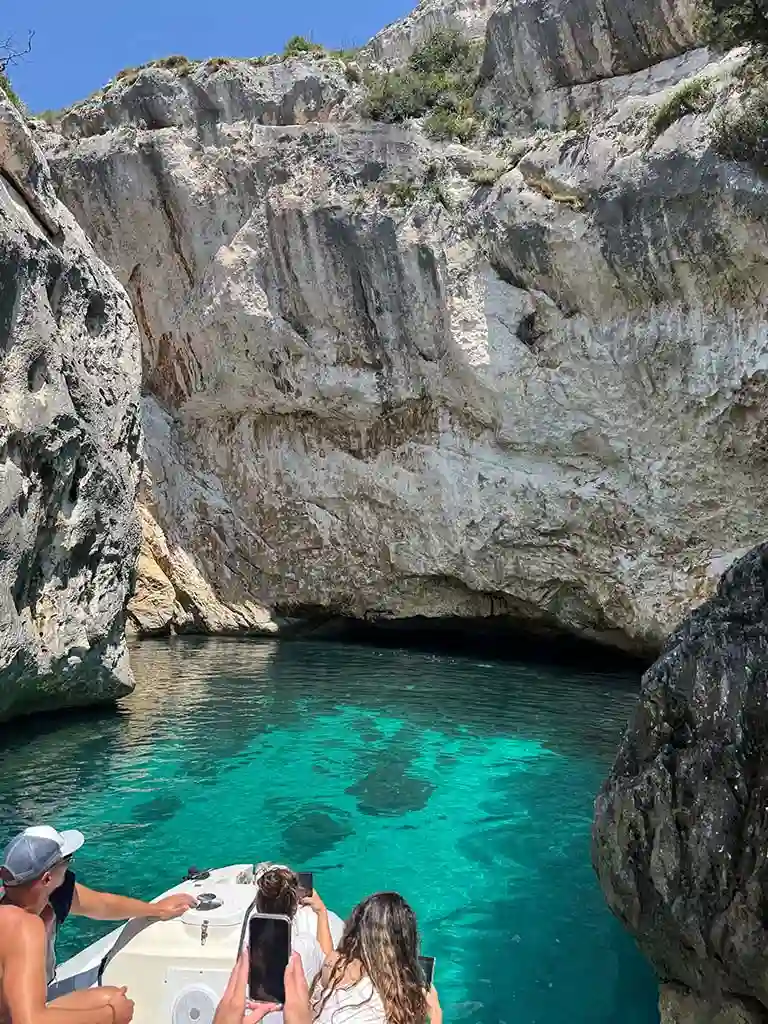
Inside, the passage opens between two high limestone walls that rise steeply on either side. The water in the channel is calm and takes on a darker, deeper tone than the open Ionian Sea outside. Sunlight falls through the gap between the cliff tops above, casting sharp shadows across the rock faces and illuminating the water in the centre of the passage. The enclosed space amplifies sound — the engine of a speedboat echoes distinctly off the walls — and the overall effect is unlike any of the open bay stops on the Karaburun coast.
Narrow Speedboats Only — Large Boats Cannot Enter
The width of the canyon entrance is the defining physical characteristic of this place. It is narrow enough that only small, narrow speedboats can navigate through it. Large vessels — ferries, bigger tour boats, sailing boats — cannot enter. The passage requires precise handling and a skipper who knows the exact line to take through the rock opening.
This is one of the reasons the canyon remains relatively unknown and lightly visited. The type of large-capacity boat tours that carry most tourists along the Albanian Riviera are simply unable to reach it. If you are on a small speedboat with an experienced local skipper, you can go in. If you are on anything larger, the canyon stays closed to you.
Entry is also condition-dependent. In rougher sea states the skipper will assess whether it is safe to pass through. On calm days the passage is smooth; in choppy conditions the swell inside the narrow channel can be amplified, and the decision to enter is always the skipper's call.
The Name & the Legend
The name comes from local oral tradition rather than any documented historical record. The story holds that the concealed entrance and sheltered interior made the canyon useful as a temporary hiding place for smugglers working the Ionian coast — a narrow passage invisible to anyone not already aware of its existence, ideal for a vessel that needed to stay out of sight.
Whether the legend is accurate or not, the geography supports it entirely. Standing inside the canyon it is easy to understand why the name stuck: the high walls, the hidden entrance, the isolation from the open sea and the ability to move through without being visible from outside all fit the description of exactly the kind of place a smuggler would value. The name has been in use among local fishermen and boat operators for as long as anyone can remember.
What to Expect Inside
The visit is typically a short stop — the passage is navigated at low speed, giving everyone on board time to take in the rock walls on both sides, the quality of the light coming through the gap above and the unusual stillness of the water in the enclosed space. It is primarily a visual and atmospheric experience. The canyon is at its most dramatic on bright sunny days when the contrast between the lit water in the centre and the shadowed cliff faces on either side is strongest.
The narrowness of the space makes it one of the most photographed stops on the full-day route, particularly from above — the view of a speedboat threading through the gap between the cliffs is one of the more striking images from the Karaburun coast.
Key Facts
Narrow speedboats only. Large boats, ferries and bigger vessels cannot enter due to the width of the passage.
The entrance is concealed within the cliff face and not visible from the open sea. Known mainly by experienced local skippers.
Tall limestone walls on both sides, calm dark water, strong echo and dramatic light filtering through the gap above.
Dependent on sea state. The skipper assesses conditions before entering — rough seas can amplify inside the narrow channel.
Falls within the Karaburun-Sazan Marine National Park.
Only included on the full-day Grama Bay tour — one of eight stops on that route.
How to Visit
The Canyon of Smugglers is only accessible by narrow speedboat and is included on one tour — our Grama Bay, Blue Cave & Haxhi Ali Cave full-day tour. It is one of eight stops on the route, positioned roughly midway through the day as the boat moves south along the Karaburun coast toward Grama Bay. The full route also includes Haxhi Ali Cave, the Secret Blue Cave, Dafina Bay and Englishman Bay.
Because the canyon can only be reached by narrow speedboat, it is not included on any large-vessel tour operating from Vlore. Our speedboats are sized specifically for this coastline, which is what makes stops like this one possible.
Frequently Asked Questions
No. The passage is narrow and only small speedboats can navigate through it. Large boats, ferries and bigger vessels cannot enter. Entry also depends on sea conditions on the day.
On the Karaburun Peninsula, roughly 1 hour by speedboat from Vlore. The entrance blends into the surrounding limestone and is not visible from the open sea — it is known mainly by local skippers.
Local tradition holds that the hidden entrance and sheltered interior made it a useful hiding spot for smugglers navigating the Ionian coast. The geography strongly supports the legend — the canyon is invisible from the sea and completely concealed once inside.
Only the full-day Grama Bay, Blue Cave & Haxhi Ali Cave tour. It is one of eight stops on that route. No other tour from Vlore currently includes this stop.
Tall limestone walls rise on both sides of a narrow channel. The water is calm and darker than the open sea. Sunlight filters through the gap above, creating a strong contrast between the shadowed cliff faces and the bright water below. The engine echo inside the enclosed space adds to the atmosphere.